



November 30, 2021 - 4:00 pm
Dr. Andrei Barbu, Research Scientist, InfoLab, CSAIL MITYen-Ling Kuo, InfoLab, CSAIL MIT
Please note the change in date and format for this research meeting. This meeting will be held on Tues., Nov. 30, 2021; (Previously scheduled for Nov. 23rd.) This meeting will also be held in a fully remote format via Zoom.
Abstract: Language, and more generally the principle of compositionality,...
Abstract: Language, and more generally the principle of compositionality,...

November 2, 2021 - 4:00 pm
Vivian Paulun
Title: Wobbling, drooping, bouncing—Visual perception of materials and their properties
Abstract: Visual inference of material properties like mass, compliance, elasticity or fragility is crucial to predicting and interacting with our environment. Yet, it is unclear how the brain achieves...
Abstract: Visual inference of material properties like mass, compliance, elasticity or fragility is crucial to predicting and interacting with our environment. Yet, it is unclear how the brain achieves...

October 26, 2021 - 4:00 pm
MIBR Seminar Room 46-3189
Drs. Jie Zheng and Mengmi Zhang
Please note, Dr. Zhang will be presenting remotely via Zoom.
Abstract:
Jie Zheng's presentation:
Title: Neurons that structure memories of ordered experience in human
Abstract: The process of constructing temporal associations among related events is essential to episodic memory. However, what neural mechanism helps accomplish this function remains unclear...
Jie Zheng's presentation:
Title: Neurons that structure memories of ordered experience in human
Abstract: The process of constructing temporal associations among related events is essential to episodic memory. However, what neural mechanism helps accomplish this function remains unclear...

October 19, 2021 - 4:00 pm
Trenton Bricken and Will Xiao, Kreiman Lab
Will Xiao's presentation
Title: What you see is what IT gets: Responses in primate visual cortex during natural viewing
Abstract: How does the brain support our ability to see? Studies of primate vision have typically focused on controlled viewing conditions exemplified by the rapid serial visual...
Title: What you see is what IT gets: Responses in primate visual cortex during natural viewing
Abstract: How does the brain support our ability to see? Studies of primate vision have typically focused on controlled viewing conditions exemplified by the rapid serial visual...

September 28, 2021 - 4:00 pm
PILM Seminar Room 46-3310
Dr. Lucas Tian, Rockefeller University
Abstract: Compositionality is a key signature of the mind. It is the ability to generalize from a small set of rules to an almost unlimited set of complex thoughts and behaviors. Compositionality is critical for many domains of intelligence, such as language, social reasoning, and motor planning....

April 27, 2021 - 4:00 pm
Dr. Ben Deen (Rockefeller University)
Host: Prof. Winrich Freiwald (Rockefeller University)
Abstract: What is the cognitive and neural architecture of core reasoning systems for understanding people and places? In this talk, we will outline a novel theoretical framework, arguing that internal models of people and places are implemented...
Abstract: What is the cognitive and neural architecture of core reasoning systems for understanding people and places? In this talk, we will outline a novel theoretical framework, arguing that internal models of people and places are implemented...
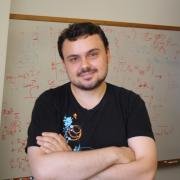
April 6, 2021 - 4:00 pm
Dr. Andrei Barbu, InfoLab, CSAIL
Host: Prof. Boris Katz (CSAIL, MIT)
Abstract: Children acquire language from very little data by observing and interacting with other agents and their environment. We demonstrate how by combining methods from robotics, vision, and NLP with a compositional approach, we can create a semantic parser...
Abstract: Children acquire language from very little data by observing and interacting with other agents and their environment. We demonstrate how by combining methods from robotics, vision, and NLP with a compositional approach, we can create a semantic parser...

March 16, 2021 - 4:00 pm
Dr. Pramod R.T., Kanwisher Lab
Host: Prof. Nancy Kanwisher (MIT)
Abstract: Successful engagement with the world requires the ability to predict what will happen next. Although some of our predictions are related to social situations concerning other people and what they will think and do, many of our predictions concern the...
Abstract: Successful engagement with the world requires the ability to predict what will happen next. Although some of our predictions are related to social situations concerning other people and what they will think and do, many of our predictions concern the...
February 16, 2021 - 4:00 pm
Mengmi Zhang, Jie Zheng, and Will Xiao (Kreiman Lab)
Host: Prof. Gabriel Kreiman (Children's, Harvard)
Speaker: Mengmi Zhang
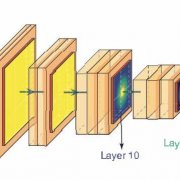
Title: The combination of eccentricity, bottom-up, and top-down cues explain conjunction and asymmetric visual search
Abstract: Visual search requires complex interactions between visual processing, eye movements, object...
Speaker: Mengmi Zhang
Title: The combination of eccentricity, bottom-up, and top-down cues explain conjunction and asymmetric visual search
Abstract: Visual search requires complex interactions between visual processing, eye movements, object...
February 9, 2021 - 4:00 pm
Dr. Andrzej Banburski and Simon Alford (Poggio Lab)
Host: Dr. Hector Penagos (MIT)
Abstract: Current machine learning algorithms are highly specialized to whatever it is they are meant to do — e.g. playing chess, picking up objects, or object recognition. How can we extend this to a system that could solve a wide range of problems? We argue that...
Abstract: Current machine learning algorithms are highly specialized to whatever it is they are meant to do — e.g. playing chess, picking up objects, or object recognition. How can we extend this to a system that could solve a wide range of problems? We argue that...

November 24, 2020 - 4:00 pm
Prof. Aleksander Mądry, CSAIL, MIT
Abstract: Large-scale vision benchmarks have driven---and often even defined---progress in machine learning. However, these benchmarks are merely proxies for the real-world tasks we actually care about. How well do our benchmarks capture such tasks?
In this talk, I will discuss the alignment...
In this talk, I will discuss the alignment...
November 10, 2020 - 6:00 pm
Dr. Keizo Kato, Fujitsu Laboratories Ltd., and
Dr. Akira Nakagawa, Artificial Intelligence Laboratory,...
Please note change in start time. This research meeting will start at 6pm EST.
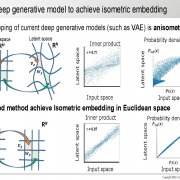
Abstract: To analyze high-dimensional and complex data in the real world, deep generative models, such as variational autoencoder (VAE) embed data in a low-dimensional space (latent space) and learn a probabilistic...
Abstract: To analyze high-dimensional and complex data in the real world, deep generative models, such as variational autoencoder (VAE) embed data in a low-dimensional space (latent space) and learn a probabilistic...

October 20, 2020 - 4:00 pm
Hosted via Zoom
Prof. Josh McDermott, Laboratory for Computational Audition, MIT
Speaker biography:
Josh McDermott obtained his PhD from MIT in 2006 and returned in January 2013 as an Assistant Professor in the Department of Brain and Cognitive Sciences, moving from Oxford University, where he was a visiting scientist during 2012. Prior to that, he was a research associate at...
Josh McDermott obtained his PhD from MIT in 2006 and returned in January 2013 as an Assistant Professor in the Department of Brain and Cognitive Sciences, moving from Oxford University, where he was a visiting scientist during 2012. Prior to that, he was a research associate at...
September 22, 2020 - 4:00 pm
Hosted via Zoom
Dr. Brian Cheung, BCS Computational Fellow, MIT
Abstract: Learning is one of the hallmarks of human intelligence. It marks a level of flexibility and adaptation to new information that no artificial model has achieved at this point. This remarkable ability to learn makes it possible to accomplish a multitude of cognitive tasks without...
June 9, 2020 - 2:00 pm
Zoom
Hossein Mobahi, Google Research
TITLE:
Improving Generalization Performance by Self-Training and Self-Distillation
ABSTRACT:
In supervised learning we often seek a model which minimizes (to epsilon optimality) a loss function over a training set, possibly subject to some (implicit or explicit) regularization. Suppose you train...
Improving Generalization Performance by Self-Training and Self-Distillation
ABSTRACT:
In supervised learning we often seek a model which minimizes (to epsilon optimality) a loss function over a training set, possibly subject to some (implicit or explicit) regularization. Suppose you train...